What creative direction actually protects when a brand operates at international scale
Creative direction at international scale is not creative expression. It is discipline — the discipline of holding a brand’s visual and tonal coherence across dozens of markets, thousands of touchpoints, and hundreds of collaborators, so that what compounds is the brand and not the noise.
The strongest global brands are recognizable in Tokyo, Paris, and São Paulo not because their local teams share taste, but because someone has held the creative line across every one of those markets, over years, through every campaign, every storefront, every production. That role is creative direction, and at international scale it is one of the least glamorous and most compounding disciplines in the craft.
-
What creative direction actually holds
Five things, held consistently, are what separate a brand that compounds internationally from one that fragments: 1. Distinctive assets that travel without erosion. Visual codes, typography, colour, packaging cues, characters, taglines. The assets that consumers recognise instantly — and that lose their power the moment they are redrawn to fit local preference. 2. Visual and tonal coherence across markets and media. The brand should feel like the same brand in a Paris print campaign, a Tokyo storefront, and a São Paulo digital asset. Local execution can flex; the underlying language cannot. 3. The craft bar that holds when you are not in the room. Global brands are made by hundreds of collaborators. Creative direction is the discipline of setting the standard so clearly that photographers, stylists, designers, and agency partners across a dozen cities produce work that belongs to the same brand. 4. Adaptation without dilution. Every market wants to localise. Some localisation strengthens the brand; most weakens it. Knowing the difference is creative direction's judgement call, and getting it wrong is how iconic brands quietly become generic. 5. The long view. Distinctive assets compound over years. The temptation to refresh, evolve, or restart is constant, and often coming from inside the house. Creative direction is also the discipline of protecting the assets that are working from being changed for the sake of change.
-
Showcase: Nespresso, from inside the discipline
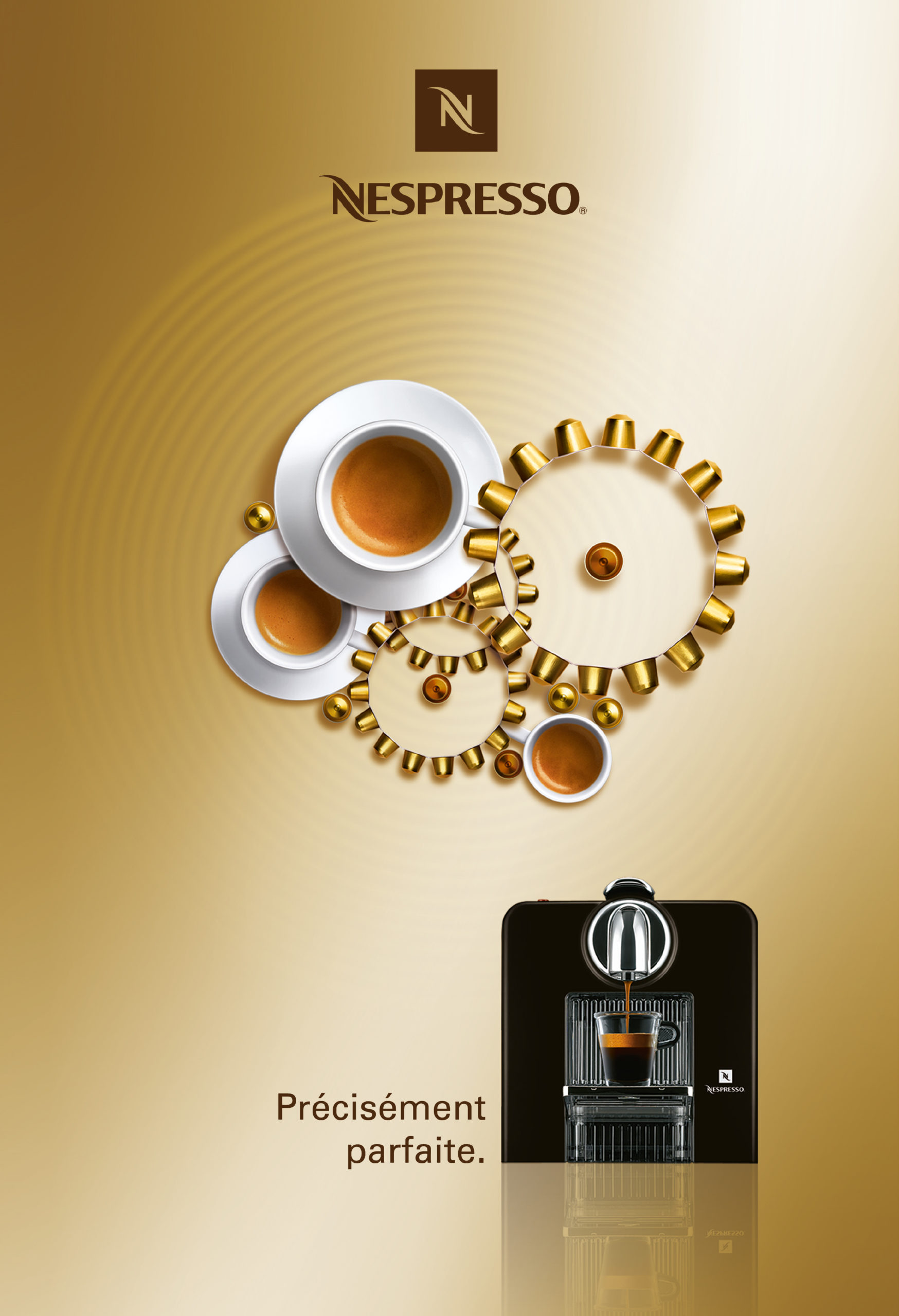
At McCann Paris, I was Nespresso's international brand custodian. My role sat inside the discipline this case study describes: holding the creative language of one of the world's most consistent premium brands, across 50+ markets, 3,000+ boutiques, and integrated productions spanning photography, styling, 3D, and illustration. Concretely: I designed the brand books that codified Nespresso's global visual and tonal standards, used across every market and every agency partner. I designed international advertising campaigns deployed across 50+ countries. I led retail and storefront creative across the 3,000+ boutique network — the physical layer that made the brand loved in every market it entered. I directed international productions across designers, photographers, stylists, 3D artists, and illustrators — the daily discipline of holding creative coherence when the work is being made by hundreds of hands in a dozen cities. Nespresso itself is one of the cleanest international examples of what this discipline produces, and it carries a strategic anomaly worth pausing on: a premium brand that does not rely on scarcity. Nespresso machines are sold globally, at accessible price points, in volumes that should structurally undermine premium positioning. Yet Nespresso has held premium status across more than 80 markets for over two decades. The answer is not the product. It is the creative direction discipline held consistently for that long: a boutique experience that delivers the same premium feel everywhere, distinctive assets protected across markets (George Clooney as long-term brand asset, visual identity disciplined to the millimetre, packaging colour codes treated as intellectual property), and a consistent tone of craft, perfectionism, and quiet luxury that never chases the tactical.
-
What working inside that discipline taught me
Working inside Nespresso's ecosystem taught me what creative direction actually costs when you take it seriously. The strategic architecture belonged to Nespresso's internal team, and the executional discipline of holding it belonged to us. Every creative decision — the typography choice on a market-specific campaign, the styling on a hero image, the finish on a storefront — either compounded the brand or eroded it. There is no neutral creative decision at that scale. That is the lesson I have carried into every brand function I have built since. Creative direction is not what happens after the strategy is decided. It is the discipline that determines whether the strategy shows up in the world at all.
-
Why this compounds commercially
The evidence base is decades old and unambiguous. Les Binet and Peter Field's body of work for the IPA has established that the strongest brands hold a 60/40 split between long-term brand building and short-term activation, that distinctive brand assets are the single most reliable driver of long-term commercial performance, and that brands which localise strategy rather than execution erode faster than they realise. Creative direction is the discipline that operates this evidence base in practice. The brands that compound internationally are the ones whose creative direction has been held with patience, precision, and refusal to trade the long-term for the tactical. Nespresso is what that looks like when it is held for two decades. It is what I learned to do at McCann. And it is what I have built every brand function around since.